
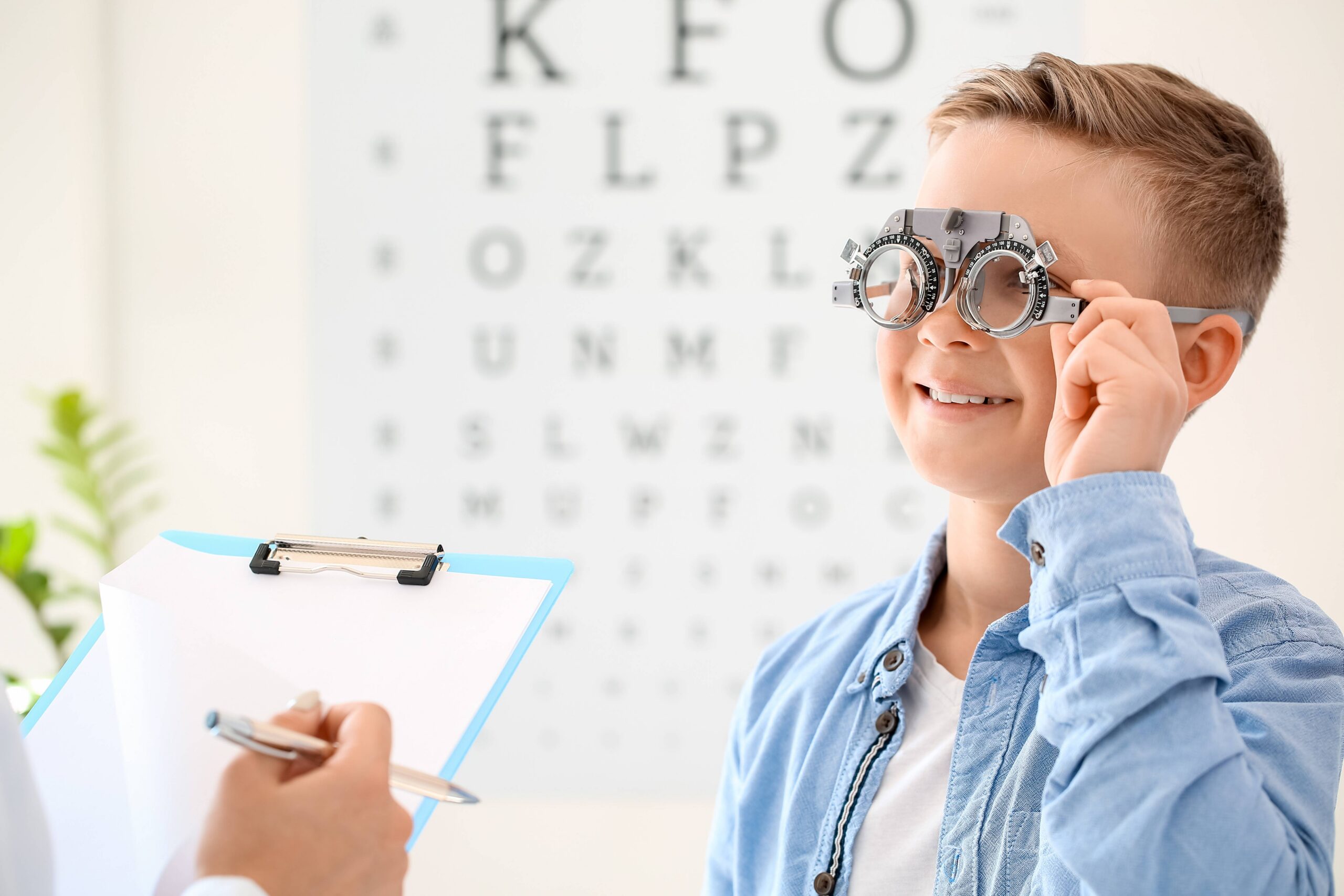
If your child has been diagnosed with myopia (nearsightedness), it’s natural to have questions – especially when you start hearing about multiple treatment options. Many parents ask the same thing: What’s the best myopia treatment for my child?
The answer isn’t one-size-fits-all. Effective myopia treatment for children depends on how your child’s eyes are developing, how quickly their vision is changing, and what treatment they can realistically maintain. Understanding how eye doctors make these decisions can help you feel confident moving forward.
What Is Myopia – and Why Early Treatment Matters
Myopia, often called nearsightedness, is a common childhood vision condition where close-up objects appear clear, but distance vision is blurry. In many cases, childhood myopia worsens as the eyes grow, particularly during the school years.
While glasses or contacts correct blurry vision, they don’t address progression. Progressive myopia increases the risk of serious eye conditions later in life, including retinal damage, glaucoma, and macular degeneration. That’s why modern myopia management for kids focuses on slowing progression — not just correcting vision.
Early evaluation through a pediatric eye exam is one of the most important steps in protecting your child’s long-term eye health.
How Eye Doctors Choose the Right Myopia Treatment
Choosing the right myopia management plan for children starts with a comprehensive eye exam and careful monitoring over time. Eye doctors consider several key factors before recommending treatment.
Age and Eye Development
Younger children whose eyes are still growing quickly often benefit from early myopia control. Treatment recommendations may change as a child’s eye growth slows.
Rate of Myopia Progression
Some children experience gradual changes, while others show rapid progression year over year. Faster progression often calls for more proactive pediatric myopia treatment.
Prescription Strength and Eye Health
The degree of nearsightedness and overall eye health help determine which treatments are safe and effective.
Lifestyle and Daily Habits
Screen time, reading habits, outdoor activity, and participation in sports all matter. Treatment should fit seamlessly into your child’s routine to ensure long-term success.
Why There’s No Single “Best” Myopia Treatment
Parents often search for the best solution, but successful myopia treatment for kids is about finding the best fit. Some options work better for younger children, others for teens. Some require daily contact lenses, while others involve simple nightly routines.
Consistency matters more than perfection. The most effective treatment is one your child can comfortably follow over time.
Common Myopia Treatment Options for Children
After evaluating your child’s vision, an eye doctor may recommend one or more myopia treatment options for kids.
Myopia Control Contact Lenses
Specialty contact lenses are designed to slow myopia progression while correcting vision. These lenses change how light focuses on the retina, helping guide healthier eye growth.
Learn more about myopia control contact lenses. This option works well for children who are comfortable handling contacts and can maintain proper lens care.
Prescription Eye Drops
Low-dose prescription eye drops are used once daily, typically at bedtime, to slow eye growth. Because these drops don’t correct vision, children usually still wear glasses or contact lenses during the day.
This is often a good option for families looking for a lower-maintenance approach to myopia management for children.
Myopia Control Glasses
Unlike standard glasses, certain specialty lenses are designed to help manage myopia progression in children while still providing clear vision. These may be recommended for kids who prefer glasses or aren’t candidates for contacts or eye drops.
Your eye doctor can determine whether this option is appropriate.
Myopia Treatment Changes as Your Child Grows
Myopia management is not a one-time decision. As your child grows, treatment may need to evolve based on how their eyes respond.
Regular follow-up visits allow eye doctors to:
- Monitor myopia progression in children
- Adjust treatment as needed
- Ensure long-term safety and effectiveness
Ongoing care is a normal and important part of successful childhood myopia treatment.
How Parents Can Support Myopia Treatment at Home
Daily habits can support medical treatment and overall eye health. Parents can help by encouraging:
- More outdoor time when possible
- Regular breaks from screens and near work
- Consistent use of prescribed lenses or eye drops
Your child’s eye doctor can offer guidance tailored to your family’s routine.
Partnering With Your Child’s Eye Doctor
Choosing a myopia treatment plan is about building a long-term strategy — not just fixing blurry vision today. With personalized care, clear communication, and regular monitoring, myopia progression can be effectively managed.
At Missouri Eye Consultants, our specialists provide comprehensive myopia treatment for children, guiding families through every stage of care. If your child has myopia or you’ve noticed changes in their vision, the first step is to schedule an eye exam and begin protecting their sight for the future.
