
What is a Cataract?
Surgery is the only way to treat cataracts. It is your choice when to have cataract surgery. Cataract surgery is recommended when vision problems interfere with daily life or affect your quality of life. You can choose not to have your cataract removed.
Cataract surgery only corrects vision problems caused by cataracts. This surgery cannot correct vision problems caused by glaucoma, diabetes, age-related macular degeneration, floaters, or other eye illnesses or injuries.
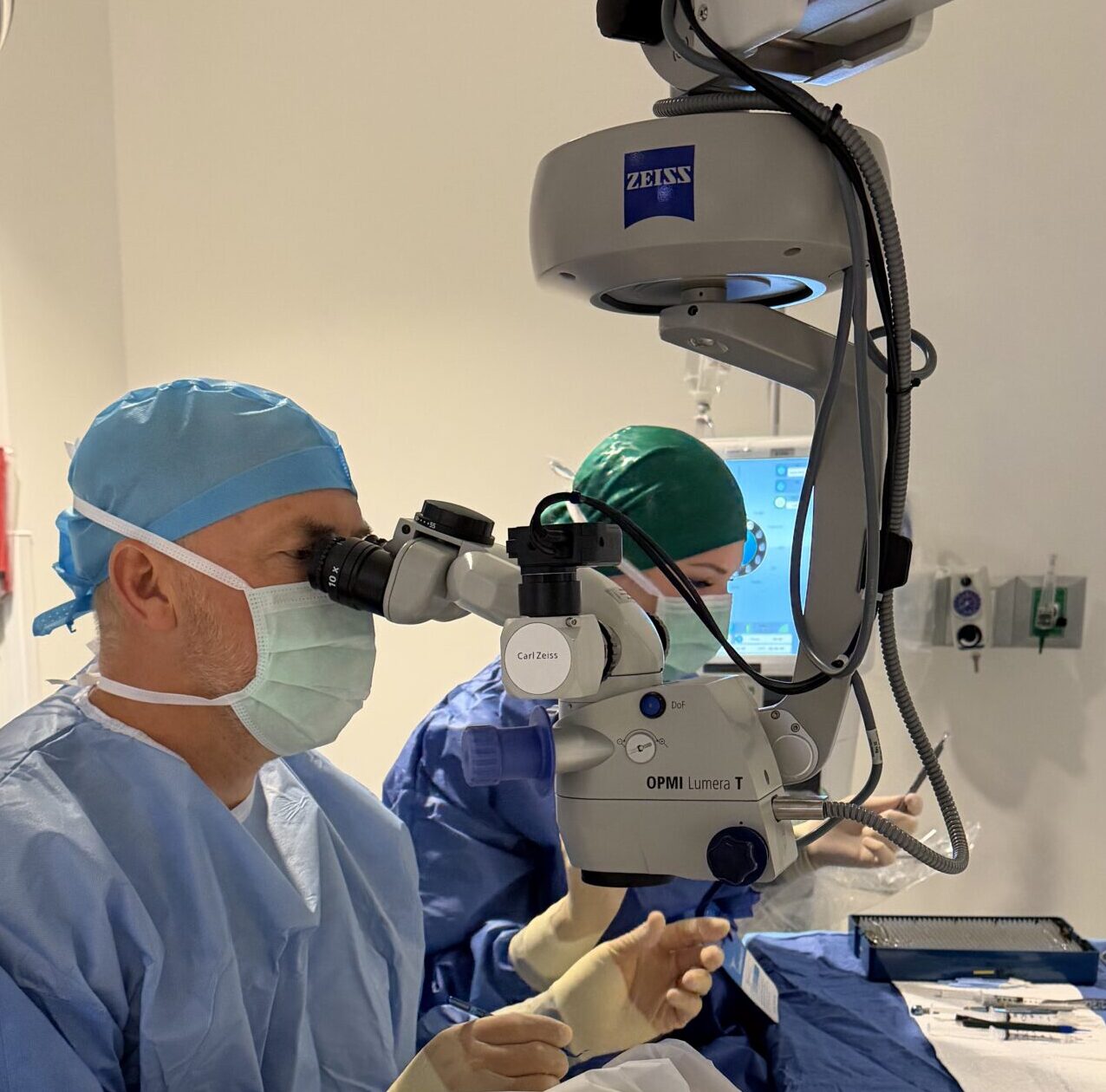
What Happens During Cataract Surgery?
Patients have a few choices to make about the intended focus of the IOL that they receive. How a patient decides is based on eye health, individual vision needs, and personal preferences. At your visit, your doctor will discuss the positives and negatives of each lens choice.
Lens Implant Choices for Cataract Surgery
Insurance covers the cost of a high-quality lens implant for all patients. Missouri Eye Consultants only implants high-quality lens implants for all patients. This lens implant is intended to improve vision and focus the eye. You will need to decide the intended focus for your high-quality lens implant.
It is important to remember that the focus point of the IOL does not affect the health of the eye. Secondly, no lens implant can guarantee 20/20, or perfect vision.
Just as a good radio can be tuned to different stations, healthy eyes can have different focal points. As an adult, wearing or not wearing glasses does not affect the health of the eye. There is nothing unhealthy about needing to wear glasses after cataract surgery. Wearing glasses after cataract surgery will not make your vision weaker over time.
Please choose your option lens below:
STANDARD CATARACT LENS IMPLANT
Insurance will mostly cover this, but I will need glasses afterward
PREMIUM CATARACT LENS IMPLANT
Insurance will NOT cover this, but I will be less dependent on glasses afterward
What if the patient has astigmatism?
In addition to being either nearsighted or farsighted, eyes can also have astigmatism. Astigmatism does not have anything to do with the focal distance of the eye. Astigmatism has to do with the shape of the eye, specifically the cornea. Astigmatism makes vision blurry at all distances.
The lens implant that comes with Medicare or other private insurance (the standard monofocal lens discussed above) does not treat astigmatism. If you have significant astigmatism and choose the “standard monofocal IOL,” you will likely need or want to wear glasses to correct your astigmatism.
A premium IOL is available to correct astigmatism, which will more fully correct your distance vision, so that you are less dependent on glasses for distance vision.
FAQs
Am I allowed to wear my contact lenses before surgery?
Yes. After you’ve had your appointment with the surgeon and all preoperative measurements have been taken, you can resume wearing contacts up until the day before your surgery.
Prior to your pre-op appointment, soft contact lens wearers need to be out of their lenses for 2 weeks, and RGP/hard contact lens wearers need to be out of their lenses for 1 month.
Do not wear your contacts on the day of surgery.
What are my physical restrictions after surgery?
Keep your head above your waist as much as possible. Usually after 7-10 days you are free to go back to your normal activities.
When can I start wearing eye make up a gain?
Can I watch TV and be on the computer after surgery?
Do I still wear my regular glasses after cataract surgery?
After cataract surgery your glasses prescription will change. Some patients will find it difficult to wear their current glasses. Wearing or not wearing your glasses will not harm or help heal your eye.
When it comes to wearing glasses after the surgery, do whatever is most comfortable for your vision.
You can order new eyeglasses about 2-4 weeks after the last eye surgery.
WiIl I have follow up appointments after surgery?
These appointments are typically 1) 1 day after surgery or the afternoon of surgery, 2) 1 week after surgery, and 3) one month after surgery.
If you chose the Light Adjustable Lens (LAL) implant, you will also have additional visits starting around 1 month to begin the process of fine tuning your vision. (See separate LAL follow up sheet.)
Will I need medication or eye drops after surgery?
What if I don’t have enough medication in the bottle to finish my full course of drops?
pharmacy. If you run out of drops before your course is up, you may pick up this second bottle from the pharmacy.
For most patients, one bottle is enough, but if you have trouble getting the drops in and it takes multiple attempts each time to get the drops in, you may need the second bottle.
Where will the surgery take place?
You may choose to have surgery at Surgery Center at the Forum located at 1410 Forum Katy Parkway Ste 102, Columbia, MO 65203 or at a local hospital. We will provide maps/directions when you schedule.
Please call 573-874-2030 if you have any questions.
Seven Convenient Locations
for All of Your Eye Care Needs

Missouri Eye Consultants -
Columbia (Keene St.)
500 N Keene St Suite 103
Columbia, MO 65201
Missouri Eye Consultants - Columbia on Nifong
900 W Nifong Blvd Suite 125
Columbia, MO 65203
